28 March 2013

Welcome Tourists?

A recent survey by the World Economic Forum asked people in 140 countries this question:
How welcome are foreign visitors in your country?

According to the World Forum Economic survey, the most welcoming countries are Iceland, New Zealand, and Morocco.  The same survey identified Bolivia, Venezuela, and Russia as the least welcoming.

More details on the survey are here and here.

27 December 2012

What's Wrong with This Picture? Part III

Americans are generally oblivious to foreign exchange rate fluctuations.  This is because the US dollar is one of the (used to the "the only") de facto international currencies.

In countries where this his not the case, like Russia, foreign exchange rates are widely publicized to the public.  After all, whether you are 5% richer or poorer on any given day compared to your neighbor in the adjacent country, while meaningless, does much for nationalistic feelings (and, if you are smart, for solid macroeconomic policy making).

I snapped this picture in a bank lobby two days ago:


The first digitized column is the bank's buying rate; the second is the bank's offer rate.  Notice that the offer rate is higher - as it should be - for the euro, Australian dollar, and British pound.  However, not only it is lower for the US dollar, it is much lower.

If these buy/sell rates were true, someone with a $100 could become a $11 billion+ man in just after 36 roundtrip trades.  After all, he would be selling high and buying low.  And, in the age of rapid on-line transactions, these trades would take less than 1 second.

The moral of the story is that in Russia, as many government officials have clued in, it is possible to make big money fast with just a few trades and as many slights of hands.

26 December 2012

What is 50 Grams to You?

50 grams, to most people around the world, is a weight measure.  In Russia, it is a volume measure:  Specifically, it measures a shot of vodka.

I was given a test recently and failed miserably.  I was asked "what is 20 times 50 grams?"  I quickly responded "1 kg."  My inquisitor told me that I failed miserably and definitely do not qualify to be a Russian after having lived here for three years.  You see, most Russian men would respond "1 liter," as in 1 liter of vodka.


See my blog:  Live Fast and Die Young: Alcohol, Tobacco, Heroin.  No more comments needed.

24 December 2012

Frozen Inside and Out

It's cold in Moscow:  -23 C or -10 F.  This is a picture of my front door, from the warm and toasty interior where the ambient temperature is 24 C or 75 F.


Where there is a slight perforation allowing a sliver of air to seep in, we have a nice chunk of frozen precipitation (see the white stuff).  

29 September 2012

Cultural Clash: To Compliment vs. To Desire

It was three years ago when I arrived to Moscow.  It did not take long to realize that relationship between men and women were radically different here than back home.  It took me a while to get used to the differences.  But, I became so used to them that I forgot about where I had come from.

In the US, there is a heightened sensitivity to a man's compliments of a woman.  Compliments often are taken as coded desire signals.  "You look beautiful today" can be construed as "I like you.  Can we go to bed?"  The same compliment in Russia is seen just as that:  a nice statement intended to be appreciated by the recipient.

A few weeks ago I was in the US and meeting with a good friend.  It has been a while, so there was much to catch up on.  At one point, and apropos to the conversation, I remarked to my friend that she was "beautiful."  She then asked:  "Are you hitting on me?"  I stated that I was not, and reiterated my negation for her reassurance.  Then I realized that I was back in the US and had to remind myself of the gender relation rules.

Back in Moscow, I was having lunch with a male colleague.  A female colleague walked up to us to discuss a business matter.  Once the conversation was over, I looked over to my male colleague and indicated that I wanted to conduct an experiment.  After that point, I turned to our female colleague and said:  "You are a very nice, beautiful woman."  She, flattered, said thank you and smiled.  I then explained how the same interaction would be interpreted in the US.

More recently, I was attending a multi-national wedding in Asia where I struck up a delightful conversation with an Israeli woman about various topics.  When it came to say goodbye, I decided to test the can-be-interpreted-as-a-come-on-in-America statement to the lady.  After saying goodbye, I told her that she as a "nice, beautiful woman."  Flattered, the lady appreciated the comment and left the party.

There it is:  There is just something strange about how men's compliments to women are interpreted in the US.  There is a difference between complimenting and desiring, but that difference seems to be lost in the milieu of the American culture.  This is somewhat sad.

16 September 2012

The NFL, and Russia

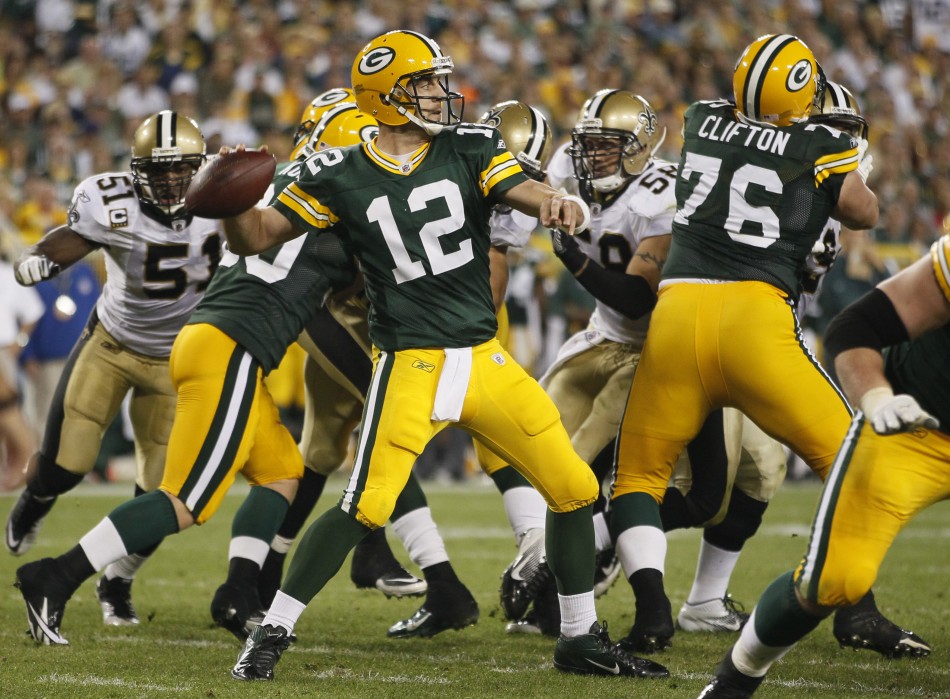
I like American football (NFL).  It is a complex and rich sport.  The 2012 season has barely started, this Sunday marking this second of seventeen weeks.  Dynasties - team empires - are in the process of being made and dismantled every week of this football season.

Joe Montana and the San Francisco Forty-Niners:  An Empire Eventually Lost

 Aaron Rogers and the Green Bay Packers:  An Empire In the Making

To the uninitiated, the American football game looks like bunch of big, fat, armored men colliding into each other at full speed while some egg-shaped object moves around the field in strange increments.  In fact, it is a microcosm of a military battle being played on the field, where strength, agility, precision, strategy, and tactics come together time and again over a one hour (play time) period to determine a winner.  Extrapolate this over a season, and the team coach is a general commanding an army to win most battles and, ultimately, the war in the Super Bowl.  Luck plays a part, but luck favors the prepared:  those who have the more potent combination of strength, agility, precision, strategy, and tactics.  Over a multi-season timespan, how dynasties (winning football teams) maintain their edge or lose is akin to how empires are born and eventually dismantled.  It many ways, football has analogs the arc of human history being played out in the sports arena.

Like human history, football has its ugly underbelly:  In pursuit of speed, mass, agility, and durability, players sacrifice themselves in search of glory.  Week after week their bodies are pounded and abused.  Some of those abuses come on the game day on the field; much of the affliction is inflected off the field through voracious diets and what is drug abuse:  Asides from the constant medication needed to mask over injury symptoms, players rely on performance enhancement drugs  to keep themselves worthy of a cut-throat league where only the best of the best play.

The end result, according to a 1994 study of 7,000 former players, is an average lifespan of 55 years while the average american male lives over 75 years.  In other words, the average NFL player lives one generation shorter than the average American.   This is an American human tragedy:  A few men, in search of glory, shorten their productive lives by a generation.

This being said, my current surroundings - Russia - forces me to ask the following question:  Why is a country, potentially as developed and advanced as the one that I am living in now, only affords a 64-year lifespan to its men?

Could it be that half of the men in Russia are NFL players?  Are there empires being won and lost?  Or are there other significant life abuses that sap the productive life of the Russian man out of him, at least 10 years before his time?

28 August 2012

Taking a Seat on His Wide Cushy

The decorator at this higher-end restaurant seems to have had a sense of humor - or poor judgment - when choosing seat cushions.

Sitting On My Wide Cushy

18 August 2012

Fresh, New Perspective

I have visitors from Tehran, Iran here in Moscow.  This trip to Moscow marks the first time that he has traveled internationally.

He took a ride from one of Moscow's main airports (SVO) to downtown, where I live.  Two hours into his stay, he asked if Russia was similar to Germany or the US.  Puzzled, I asked him why he asked the question.  He said:  "The roads here are just like the ones in Tehran.  I was wondering if the roads in other countries were like this*."

Although I frequently complain about the roads here, I did not expect this observation from a "third-world" country citizen who is living with an economy crippled by severe international sanctions and decades of internal mismanagement.  Basically, I thought that roads would be much were better here.  Macroeconomic data indicate why:

Metric (2011 estimate)
Russia
Iran
GDP (purchasing power parity):
$2.414 trillion
$1.003 trillion
GDP - real growth rate:
4.3%
2%
GDP - per capita (PPP):
$17,000
$13,200

Source:  The World Fact Book

A quick scan of photos on the web appears to prove my visitor correct.  The roads are, indeed, very similar.


Tehran or Moscow:  Can You Tell The Difference?
According to Tom Vanderbilt, the author of Traffic: Why We Drive the Way We Do (and What It Says About Us), “Traffic behavior is more or less directly related to levels of government corruption.” Vanderbilt cites a clear correlation between traffic-fatality rates per miles driven and a country’s ranking on Transparency International’s corruption index. (In terms of road safety, the Scandinavian countries fare the best; Nigeria is near the bottom of the list.)
Per Transparency International, Russia is as corrupt as Nigeria, ranking 2.4 on a scale of 10, where 10 is as honest as could be. Iran, by comparison, is a slightly less corrupt place, scoring a 2.7 on the index. Maybe Iran's less corrupt rating compensates for its worse economic picture when compared to Russia.

---
* The visitor does find Moscow to be a nicer city than Tehran.  He finds it scenic, pedestrian friendly, and replete with fresh air.

14 August 2012

Unfortunate, Unsightly ... Anywhere!

If you look closely to what's hanging out of this unfortunate man's trouser cuff, you'll notice a urine-filled sack attached to a catheter.  This man is obviously afflicted with a miserable condition - and this miserable condition is an awful sight anywhere, especially in an eating establishment.


At Least, He is Wearing Comfortable Shoes

13 August 2012

Cyber Soap

As demonstrated here, this "ON LiNE Kitchen Soap" comes with a special cache that allows it to function in the physical world, without network connectivity.  It also works well online, when you might have to wash out your textually active teenage kid's filthy thumbs. lmao lol.


18 July 2012

Wasting Away Glamorously

Ulliam's a relatively new but trendy restaurant near my apartment in downtown Moscow.  The likes of Marat Safin, winner of US Open and Australia Open, Dinara Safina, finalist and semifinalist in all four tennis grand slams, fashion models, actors and literature icons are frequently spotted there.  

This place attracts quite a crowd.  This crowd is mostly interesting.  At times, it is annoying because the crowd is as it blocks my path on the sidewalk, forcing me to wade through bodies drenched with cigarette smoke.  Often, however, there are a few unexpected clients:  Anorexic women waiting for their chance to patronize the restaurant.

Suitable for Ulliam's Glam Scene

I am and old fashion type.  If I go to a restaurant, I expect to eat.  So, the frequenting of the joint by the ultra-skinny anorexic types is a bit of a puzzle to me ... then again, food is probably secondary to the primary goal of rubbing shoulders with glamour.

12 July 2012

Moving Forward Towards the Past

From New York Times:  Bill to Restrict Web Content Is Assailed in Russia


Bill to Restrict Web Content Is Assailed in Russia

MOSCOW — Major Internet sites and human rights advocates sharply criticized a proposed law that would grant the Russian government broad new powers to restrict Web content, ostensibly to protect children from pornography and other harmful material. Critics said the law could quickly lead to repression of speech and a restrictive firewall like the one in China.
Wikipedia, the free online encyclopedia, shut its Russian Web site on Tuesday to protest the proposed measure, and instead posted a large warning on its home page: “Imagine a world without free knowledge.” The notice said the proposed law “can lead to the creation of extrajudicial censorship of the Internet in Russia, including the closure of access to Wikipedia.”
The new measure is part of a wider effort by the Russian authorities to crack down on the opposition since President Vladimir V. Putin’s inauguration in May. They have adopted a law sharply increasing financial penalties on protesters who take part in unsanctioned rallies, begun criminal investigations into several political opposition leaders and considered a plan to require nongovernmental organizations receiving foreign aid to register as foreign agents and face additional auditing and reporting requirements.
With television networks in Russia — and most newspapers and other media outlets — under tight government control, the Internet has emerged as the primary medium for political discourse. Citizens using cellphone cameras documented fraud in last December’s parliamentary elections, then posted video to YouTube and other sites. Organizers of thehuge anti-government protests that followed turned to Facebook and other social media to draw tens of thousands of demonstrators on to the streets of Moscow.
The bill has been moving quickly through the Duma, the lower house of Parliament. An initial version was approved last week and a second version, including some amendments, is scheduled for debate in the chamber on Wednesday.
On Tuesday, Wikipedia was joined in opposing the legislation by Yandex, the Russian search engine, and Live Journal, the country’s most popular blog-hosting site, which provides a platform for a number of Russia’s most outspoken political commentators and opponents of Mr. Putin’s government.
VKontakte, a popular Russian social networking site, stripped a message across the top of its home page saying, “the State Duma is considering a law to impose censorship on the Internet.” It directed visitors to Wikipedia’s Russian site, where the only information available on Tuesday was criticism of the legislation. While supporters of the law said it would create new protections for children against illicit content, critics said the Internet was so porous that such content could never be fully stopped while sites like Wikipedia, which has encyclopedia entries on all sorts of adult topics, would be vulnerable to government repression.
“The legislation in its current form will be ineffective,” said Ochir Mandzhikov, a spokesman for Yandex. “At a minimum it is necessary to work further on a conceptual framework and clearly write out the procedures,” he added, “in order to preclude possible abuses.”
Earlier this year, the English-language Wikipedia, American Web sites and technology companies participated in a similar protest effort against two bills in the United States Congress that were aimed at cracking down on piracy. The effort helped derail the legislation.
The proposed law in Russia would establish a registry or so-called “black list” of Internet content that is prohibited for publication, and it would create procedures for blocking Web hosting companies that do not block the banned material.
Law enforcement agents would be empowered to add sites to the registry of banned material, in some cases without obtaining a court order. The bill would allow sites to be blocked using domain names and IP addresses. It would effectively require access to banned material to be cut off within 72 hours, though some details of how the government would enforce the restrictions were not laid out in the bill.
Natalya Kaspersky, chief executive of InfoWatch, a software company that provides data protection services, said some new restrictions were needed in Russia to protect children and that the fears of government censorship seemed overblown.
“We might argue if such ‘black list’ approach is efficient in the modern Internet assuming the sites might quickly move to another address,” Ms. Kaspersky wrote in an e-mail. “However, it is better than nothing.”
She added, “Right now we have a tremendous freedom of speech in mass media, with no prohibited topics at all.”
The Presidential Council on Civil Society and Human Rights, an advisory body, issued a statement sharply criticizing the legislation, saying “the list of resources to be blocked is too broad.”
The group said the law would allow “restricting access to information which is prohibited or undesirable for children, for all users of the Russian segment of the Internet, with no possible appeal procedures and re-examination.” The group added, “Many bona fide Internet resources with legal content may be affected by the mass block since the system would impose severe restrictions on the basis of subjective criteria and assessments.”
“The Internet is the only thing that stands between Russia and the Spiral of Silence,” said Ivan Zassoursky, the chairman of the New Media Department in the Faculty of Journalism at Moscow State University, referring to a theory put forward by the German political scientist Elisabeth Noelle-Neumann, in which people, feeling isolated, silence their own political views.
“The Internet has been a very strong force to counter that,” Mr. Zassoursky said. “It has given life to political discourse in a very free and independent way.”
Andrew Roth contributed reporting.

03 July 2012

Who Moved My Cheese?

And why did he move it?

I have come to conclude that there is a broader psychological experiment going on; moreover, I and any other person dealing with the Russian bureaucracy is a subject of that experiment.  Someone in a white lab coat is watching us rats grope and grovel our way through an endless maze with continuously changing conditions.  Because there is no predictability, the objective of the experiment appears to be gauging reactions to situations that prevent conditioned learning.  There can be no other rational explanation.

Humbly Yours, Serving the Russian Bureaucracy

The agonizing saga of reimporting my car back into Russia continues.  Twice, I have been rejected by the Transportation Authority.  The second excuse for not processing my paperwork was a masterstroke.


The pencil pusher with seemingly magical powers to either grant me some piece of paper or continue to give me the runaround did the latter:  He rejected my application on the grounds that my Russian automobile insurance had my name in Latin letters and, because he was unable to read Latin letters, he could not be sure that the insurance was in fact in my name.  The argument that my passport number on the insurance form matched the number in my passport and the Latin letters in both documents also matched did have any sway.  


My Cheese:  A Stamped Document from a Bureaucrat


Instead of yielding to common sense, the bureaucrat instructed me to go to a specific insurance kiosk and buy a new policy that inscribed my name in Cyrillic letters.  Once I went there, I suspected that the insurance agent and the Transportation Authority bureaucrat had a kickback agreement - where the agent would reward the bureaucrat for new business.  Disgusted, I refused to go along, went to my original agent to request the change, and wasted another day on this dreadfully inefficient and inane process.


Who Moved My Cheese?


Here is the rub:  Last year, the same guy with the same paperwork did not have any problem giving me the paperwork needed to keep my car in Russia for another year without paying a $15,000 "import" tax.  This year, the game was completely different.  A seemingly random barrier was erected to prevent the job from getting done.  Someone moved my cheese!

Ultimately, the question is why the rules are different this time around?  Is it because bureaucrats are trying to do as little as possible while making a coin on the side?  Or is that explanation way too blatant to be true and, in fact, something grander and sinister is going on?  Could it be that someone is doing a vast experiment, with the subjects being subjects of the Russian bureaucracy, and the premise of the experiment being just how far the subjects could be pushed until the break, play dead, or rebel?

24 June 2012

Life is a Dog


I found this trained begging dog on the grounds of Exhibition of Achievements of the National Economy (ВДНХ) in Moscow.  The irony, of course, is a beggar dog on the grounds of "Exhibition of Achievements of the National Economy."

The youngster was very well-behaved and cute.  I take it that the irony of the situation was part of the art portrayed by the dog - whose job can be defined as a street performer, social commentator, or political activist under better interpretations.

23 June 2012

Something To Celebrate

Here is a bit of self-organization to perform something fun and amazing.  With this spirit - if sustained - Russians could take their country far into the future.


03 June 2012

Keynesian Economics

Keynesian economics, among other things, posits that an active participation by the public sector (government) is needed in certain points of the economics cycle to eliminate uncertainty, stabilize the system, and incite national growth.  In particular, the government may be called upon to create jobs, no matter how inefficiently, to put money in consumers' pockets and stoke spending.


The construction of the fabled Golden Gate Bridge has aspects of Keynesian economics:  Assembled in San Francisco, the bridge's parts were constructed on the US East Coast and transported via railroad across the country to spur economic on a wide geographical basis on the tails of the 1929 market crash and ensuing Great Depression.

I am sort of witnessing my own version of Keynesian economics here in Russia, except the Russian version appears to be a public-private partnership:  You see, several jobs are protected to secure a simple outcome, no matter how inefficiently.

John Maynard Keynes: A Giant Among Men

As a foreign worker in Russia, I have the privilege of bringing a personal car with me to Russia without paying import duties.  That privilege has to be renewed annually by, effectively, reimporting the car.  This means that I have to drive my Toyota minivan across international borders and drive back into Russia.  The closest border to Moscow is Belarus, but Russia and Belarus have a common customs regime, making that border impractical.  The next closest border is Ukraine, but I have been advised that border officials (on both sides) behave more professionally at the Finnish border, some 600 miles (1,000 km) away and back.

To drive the car to the border, I have to reclaim my California license plate (I used to have two plates, but someone stole one of them) from the Transportation Authorities.  As in almost every case when on deals with Russian government authorities, one has to show legal residence (this applies to Russian citizens as well).  In foreigner's case, legal residence is established through a registration process, and that process needs to be kicked off upon every entrance into the country.  Because of my job, I travel abroad frequently, so I have to register frequently.

Except, that I did not register last time I entered Russia.  Realizing this, the good folks around me urged me to quickly register before the end of the day.  I kid you not, but the process was like this:

  1. A helpful and knowledgeable HR professional took on the responsibility to register me.
  2. The registration requires the CEO's signature.  The CEO was out of the office, so we had to get a courier to take the forms to him.  The courier was not reachable, so we used a driver to do the same thing.
  3. Once the forms were signed, they were to be taken to the right authorities for finalization; except that drivers only drive.  Because the courier was unavailable and because time was running out, the HR professional, her director, and I had a firefighting meeting to discuss what to do.
  4. We called my wife and asked her if one of her employees would be able to intercept the forms from the driver and deliver them to the authorities before 5:00 pm.  
  5. She reached out to two people, and got one of them to sign on.
  6. He sprinted from my wife's office to the authorities (about a 2 km run) and got into the door at 4:57 pm.
  7. Once the forms were signed, the brave runner handed back the forms to my wife, who handed them back to me so that I can hand them back to the helpful HR professional.
It took seven people, several calls, a couple of meetings, and a mad dash to get me registered (hats off to Keynesian job creation).  

The next day, I accompanied my driver to the Transportation Authorities to exchange my Russian plates for my California one (singular).  My driver had already scouted the Transportation Authorities to ensure that we understood the process there.  Luckily, things went smoothly:
  1. We showed up at one window to make a petition;
  2. We then drove to a nearby inspection site to ensure that all was OK with the automobile;
  3. We then went back to the same window to await to be called with the final forms;
  4. With the final forms, we went to another department to get the California plate and answer questions of why we only had one.
This phase took six people.

Now comes the drive to Finland.  I have developed a phobia of sorts here:  I limit my driving whenever I can (hence my driver and the extra cost that goes with it).  To take the car across the border, I will ride a couple of trains to a border town, pick up the car from my driver, exit Russia after completing some customs forms (it will take two customs officials per my experience last year), drive to Finland and get through their customs (it involved three Finns last year), and then drive back to Russia and engage another two Russian customs officials over an hour or so.  This leg takes nine people.

Dorothea Lange's Migrant Mother:  I wish I were living in Russia!

Eliminating duplicate heads, the entire operation involves some 19 people.  That is a lot of time, people, and expenses for something rather simple:  Allowing me to keep my personal car without a $15,000 import duty for my family's private use.  Apparently, comparing personal effects import and export manifests when a foreign worker moves into and out of Russia, and collecting taxes at that juncture if needed, is too efficient and does not create or protect enough jobs.  

John Maynard Keynes is rolling his his grave now.

You Can Take a Boy Out of Russia ...

But you cannot take Russia out of the boy.


Here are some street performers playing in Salzburg, Austria, Mozart's hometown, on 1 June 2012.